Auditory Processing Disorder (APD)
Hear the Sounds, but Struggle to Understand the Words?
Auditory Processing Disorder (APD) affects how the brain interprets and makes sense of sound, particularly speech. A person may hear that someone is talking but have difficulty understanding what was said—even when sounds are loud enough to hear.
APD can make listening especially challenging in noisy environments, during group conversations, or when processing complex verbal information.
Common listening challenges associated with APD include:
Difficulty understanding speech in background noise
Trouble following conversations with multiple people
Difficulty understanding spoken instructions or complex information
Misunderstanding words or needing information repeated
APD can occur in individuals with normal hearing as well as those with hearing loss. A history of certain conditions, including chronic childhood ear infections, traumatic brain injury, seizures, or stroke, may be associated with an increased risk of auditory processing difficulties.
Could You or Your Child Have Auditory Processing Difficulties?
Which of these sound familiar?
Tally all that apply:
Feels confused in noisy environments
Is easily distracted
Becomes easily flustered or confused
Is forgetful
Has difficulty spelling
Is disorganized or frequently loses things
Mixes up speech sounds
Needs extra time to study or process information
Often says “What?” or “Pardon?”
Responds slowly or with a delay
Has speech that is often unclear or difficult to understand
Has trouble maintaining proper sequence or order
Has a short attention span
Has difficulty listening
Has trouble following spoken instructions
Has trouble identifying where sounds are coming from
Tires easily
Has a history of chronic middle ear infections
Experiences social difficulties
Has short-term memory difficulties
Is sensitive to loud sounds
Has difficulty with reading comprehension
What Do Your Answers Mean?
If you checked several items, you or your child may benefit from further evaluation of listening and auditory processing skills.
These difficulties can have many possible causes, and this checklist is intended for awareness only. It is not a diagnostic tool, and the number of items selected does not determine whether someone has Auditory Processing Disorder (APD).
Concerned about listening difficulties? Contact Back Mountain Hearing Care to learn whether an auditory processing evaluation may be appropriate.
Dr. Angela Alexander, founder of the Auditory Processing Institute, presenting a TED talk on APD.
How Do You Know If You Have APD?
An auditory processing evaluation helps determine whether you have APD and identifies the specific listening skills that may be affected.
Although some aspects of testing are similar to a standard hearing evaluation, APD testing includes additional speech and listening tasks. Depending on the evaluation, you may be asked to:
Listen to and repeat words presented in quiet and in background noise
Understand sentences when competing speech is present
Complete listening tasks that assess different aspects of auditory processing
Your results are compared with age-appropriate normative data to identify areas of difficulty. These findings help guide recommendations for treatment and determine whether an individualized auditory training program may be appropriate.
Can Auditory Processing Improve?
Auditory training is designed to help you practice and strengthen specific listening skills.
Think of it as physical therapy for your listening system. Through structured exercises and repeated practice, auditory training targets the skills that make everyday communication challenging.
At Back Mountain Hearing Care, auditory training is individualized based on your evaluation results and listening needs. Sessions typically take place once a week over approximately 12–14 weeks, with periodic reassessments to monitor progress and guide treatment.
Our Approach: The Buffalo Model
Dr. Kayla Bloom-Trosky completed APD training through the Auditory Processing Institute under Dr. Angela Alexander, who teaches the Buffalo Model developed by Dr. Jack Katz.
The Buffalo Model provides a framework for evaluating auditory processing difficulties and developing individualized treatment plans based on a person's specific listening needs.
We primarily provide in-person auditory training sessions, with virtual appointments available on a case-by-case basis.
Does Insurance Cover APD Evaluation and Training?
Insurance coverage varies by plan and service.
Many insurance plans cover auditory processing evaluations, although copayments, deductibles, and other out-of-pocket costs may apply.
Auditory training provided by audiologists is generally not covered by insurance. We will discuss the anticipated cost of training and provide a quote during your APD evaluation so you can make an informed decision about treatment.
Take the Next Step Toward Better Listening
If you or your child struggles to understand speech, particularly in noisy environments, an auditory processing evaluation may help identify the source of those difficulties and determine appropriate next steps.
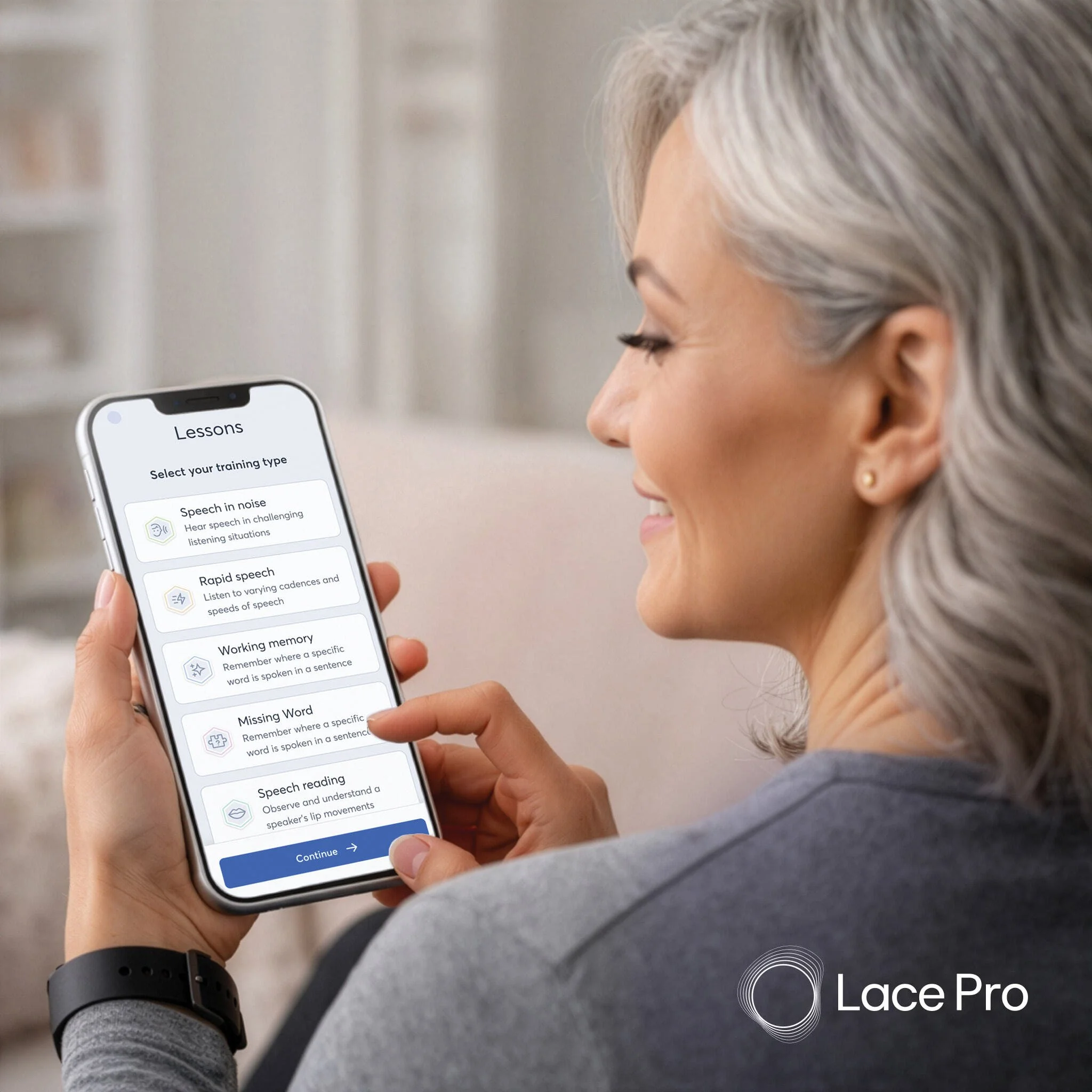
Improve your listening skills with LACE!
LACE Auditory Training: Practice Listening Beyond the Hearing Test
Even with normal hearing or well-fitted hearing aids, understanding speech can be challenging, especially in noisy environments or group conversations.
LACE (Listening and Communication Enhancement) is a computer-based auditory training program designed to help you practice listening and speech understanding through interactive exercises. The program allows you to work on your listening skills at your own pace from home.
LACE may be a helpful option for adults who want to improve their communication skills, including individuals who use hearing aids but continue to struggle to understand conversations.
Interested in LACE auditory training? Contact Back Mountain Hearing Care to learn more about the program and whether it may be right for you.